


How to prepare for your in-home health visit
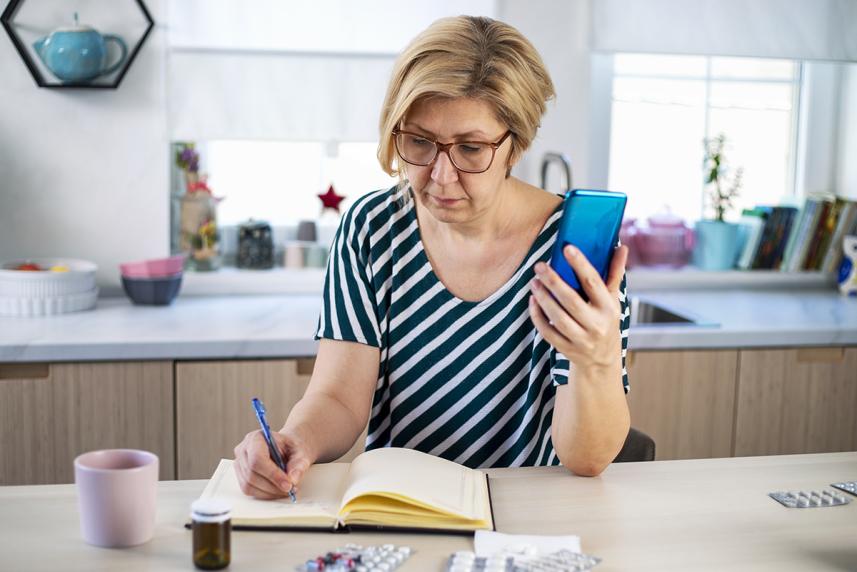
Get the most out of your in-home visit with these seven expert tips.
After years of making your way to the doctor’s office, the (exam) tables are turned: Now, a clinician is coming to you. That’s a good thing. No need to worry about traffic or long waits.
Still, you may also be feeling a little unsure about what to expect — and that’s completely normal. So, here’s the first thing to know about an in-home visit:
“It’s really about empowering you to take care of yourself,” says Julie Miloro, RN, administrator of Stella Maris, a non-profit home health care service affiliated with Mercy Medical Center in Baltimore. These visits, she says, may even help you prevent trips to the hospital.
Scheduling your appointment was an important first step. This is what to do and what to expect next.
7 ways to prepare for an in-home health checkup
1. Expect a pre-visit call. The day or evening before your appointment, you’ll get a call confirming your visit — and the time they expect to arrive. Be sure to pick up the phone and write down any important information. They’ll remind you of what you need to have handy (such as your prescription medications).

Are you as healthy as you think you are?
Your no-cost in-home health assessment can bring peace of mind. Call 877-302-3672 to schedule or book online.
2. Gather all your medications. Older adults often take multiple medications for multiple health issues. About 22% of U.S. adults ages 40 to 79 take five or more prescription drugs. Plus, many still take leftover medications from a long-ago illness. Often, says Miloro, people may not understand what they’re taking — or why they’re taking it. “They just take whatever’s there,” she says.
That’s why the health care professional who comes to your home will check your medications, says Miloro. They’ll list the pills you’re taking on your health care assessment that gets sent to your PCP. If something doesn’t match up, your PCP will follow up with you.
Your provider will also go over each medication, including over-the-counter drugs like pain relievers, and even vitamins and supplements. They also discuss with you why you’re taking them.
They can also go over side effects of the medication and the schedule with which you should take the medication, says Miloro. “And sometimes patients will ask, ‘Can you set up my pillbox?’” says Miloro, adding that in-home providers can do that as well.
3. Drink plenty of water if you’re having urine tests or blood tests. If your provider tells you that you’ll need to have these tests, it’s important to be well hydrated. This makes it easier to take these samples, explains Miloro.
It’s also important to stay hydrated if you’re on a narcotic pain medication. That’s because constipation is a common side effect of these drugs, says Miloro. “We check and see if the patient is on a stool softener,” explains Miloro, “and make sure we’re educating them to be properly hydrated.”
4. Dress comfortably. There’s no need to dress up for your visit. Your in-home provider may want to see how well you perform daily tasks so wear what’s comfortable for you. And you don’t have to worry about doing a lot of cleaning, preparing food or doing any entertaining at all. Remember, this visit is all about you.
5. Have your primary care provider’s number handy. After the visit, the clinician will send a full report to your primary care provider, detailing all their findings and outlining their recommendations. You can then follow up with your PCP about this. Your PCP will also receive a summary of your visit to address with you at your next appointment.
6. Invite a family member or friend over to help ask questions or take notes. Having a trusted family member or friend join you for your visit may help put you at ease. Plus, they can also serve as your designated notetaker, remind you of any questions you’ve forgotten to ask, or just be there to keep you company.
7. Think about your health care goals. “You’ll be involved in creating your care plan for whatever goals you want to reach,” says Miloro. For example, if you have heart issues, you may set a goal of being more active. Or if you want to lose some weight, you may want recommendations on the best way to get started.
Your in-home provider will talk to you about your goals, help you set new ones, and establish doable ways to reach them. For example, they might work with you to set a realistic goal like walking every day or doing simple stretches every morning.
All in all, in-home visits are convenient, time-saving, and super helpful. And they can be an important part of your health care journey. Best of all, they’re free: Most insurance plans and Medicare cover these in-home visits — at no extra cost to you.
Sources:
The outcomes of nurse practitioner (NP)-provided home visits: Geriatric Nursing
The doctor will see you now, in your home: Harvard Health
Prescription drug use among adults aged 40–79 in the United States and Canada: Centers for Disease Control and Prevention
